Business | Jul 06, 2026
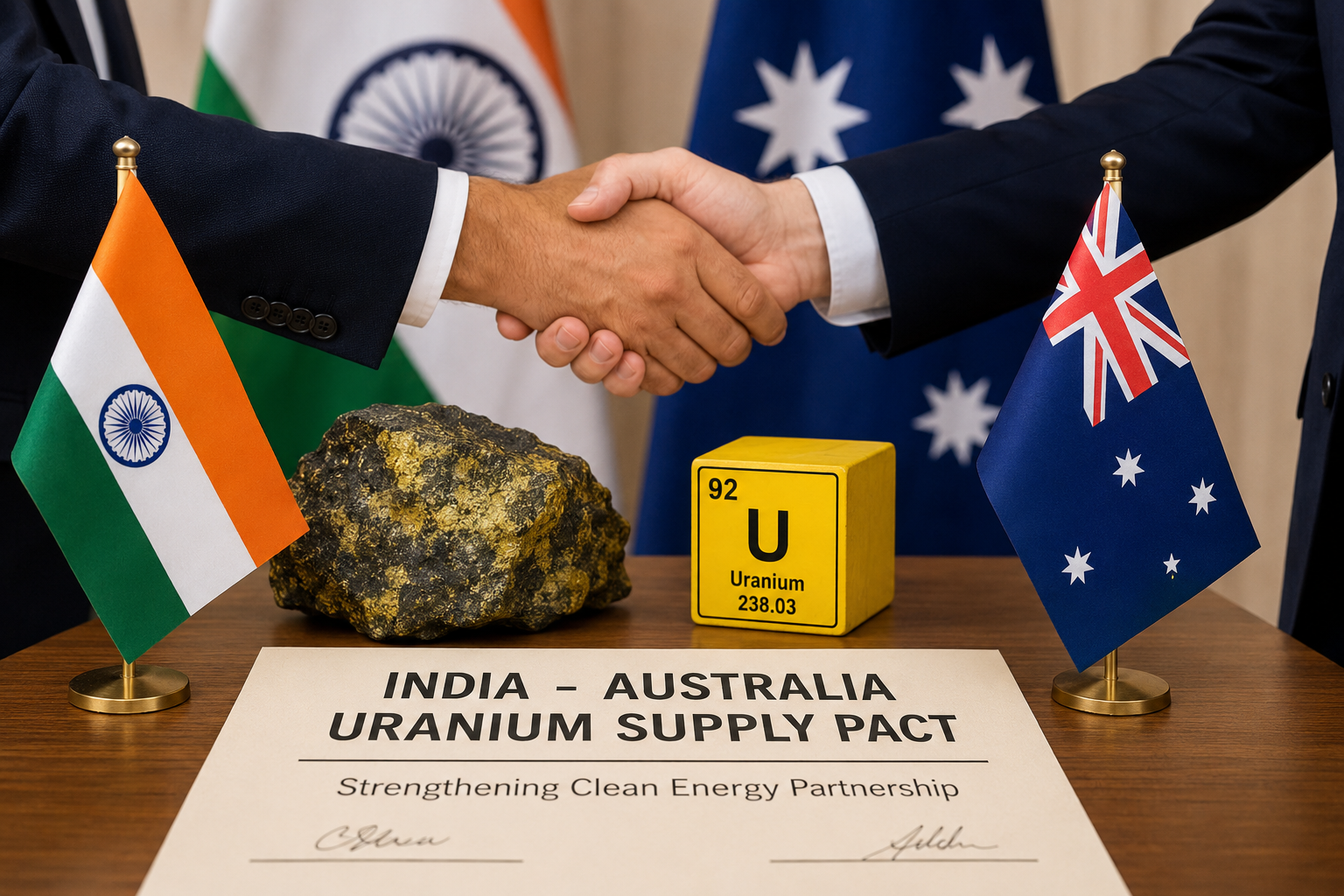
New Delhi: India and Australia are expected to take a major step forward in their strategic partnership with the signing of a long-term uranium supply agreement during Prime Minister Narendra Modi’s upcoming visit to Australia. The proposed pact is being viewed as a significant milestone in bilateral relations, strengthening cooperation in clean energy, critical minerals, and regional security.
The agreement is expected to ensure a stable supply of uranium fuel for India’s rapidly expanding nuclear power programme. As the country seeks to meet rising electricity demand while reducing dependence on fossil fuels, nuclear energy has become a crucial part of its strategy to achieve energy security and lower carbon emissions. A steady supply of uranium will support the operation of existing nuclear reactors and facilitate the development of new projects planned over the coming years.
Australia, which possesses nearly one-third of the world’s known uranium reserves, is one of the largest exporters of the mineral. Although India and Australia signed a Civil Nuclear Cooperation Agreement in 2014, commercial uranium exports have remained limited. The new pact is expected to operationalise that framework by establishing long-term commercial arrangements between Australian mining companies and Indian nuclear agencies.
Apart from the uranium agreement, Prime Minister Modi and his Australian counterpart, Anthony Albanese, are expected to hold wide-ranging discussions on trade, investment, defence, critical minerals, renewable energy, cybersecurity, emerging technologies, and supply chain resilience. The leaders are also likely to explore ways to deepen cooperation under the Comprehensive Strategic Partnership and strengthen collaboration in the Indo-Pacific region.
Economic ties between the two countries have grown steadily following the implementation of the India-Australia Economic Cooperation and Trade Agreement (ECTA). Bilateral trade has expanded significantly, with both nations looking to enhance cooperation in sectors such as manufacturing, clean energy, education, agriculture, digital technology, and innovation. Business leaders from both countries are also expected to participate in high-level meetings aimed at boosting investment and commercial partnerships.
Energy experts believe the proposed uranium supply agreement will play a key role in supporting India’s long-term energy transition. Nuclear power provides reliable, low-carbon electricity that complements renewable energy sources like solar and wind, helping the country balance its growing power requirements while advancing its climate commitments.
The visit also carries strategic importance as India and Australia continue to strengthen cooperation through the Quad grouping alongside the United States and Japan. With increasing emphasis on economic security and resilient supply chains, both nations view closer collaboration as essential for maintaining stability and prosperity in the Indo-Pacific.
If finalised, the uranium supply pact will mark a new chapter in India-Australia relations, reinforcing mutual trust and expanding cooperation in energy, trade, and strategic affairs. The agreement is expected to contribute significantly to India’s clean energy ambitions while further cementing Australia's role as a trusted and reliable partner in the region.