World | Mar 02, 2026
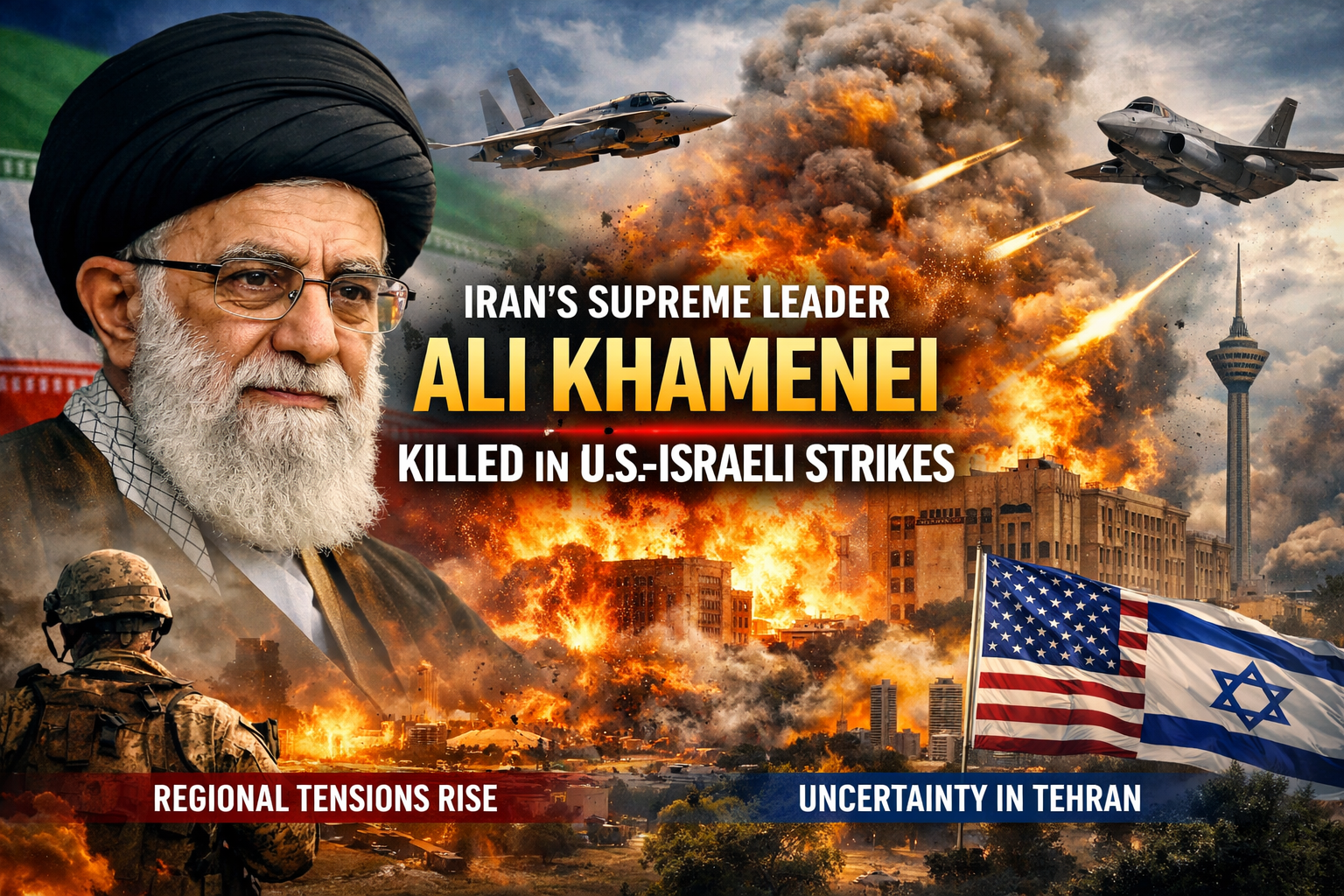
Ali Khamenei, Iran’s Supreme Leader for more than three decades, has been killed at the age of 86 following coordinated military strikes carried out by the United States and Israel, according to Iranian state media and statements from U.S. officials.
Iranian authorities confirmed the death early Sunday, hours after U.S. President Donald Trump publicly stated that Khamenei had been killed in a joint military operation targeting key Iranian leadership and military facilities. Iranian state television later verified the reports, declaring 40 days of national mourning and calling the attack an act of aggression.
The strikes represent one of the most dramatic escalations in Middle Eastern tensions in recent decades, intensifying fears of wider regional conflict.
Khamenei became Iran’s Supreme Leader in 1989, succeeding Ayatollah Ruhollah Khomeini, founder of the Islamic Republic. Over 36 years in power, he consolidated sweeping authority over the country’s armed forces, judiciary, intelligence services, and state broadcasting, becoming the central figure in Iran’s political and religious system.
Under his leadership, Iran expanded its regional influence by supporting allied groups in Lebanon, Iraq, Syria, and Yemen. He maintained a firm stance against Western influence and consistently opposed Israeli policies, framing Iran as a leading force of resistance in the Middle East.
Khamenei’s tenure was marked by long-running tensions with Washington over Iran’s nuclear program. International sanctions severely strained Iran’s economy, contributing to inflation, unemployment, and domestic unrest. Despite economic pressures, Iran continued developing its missile capabilities and strengthening its regional alliances.
At home, his government faced repeated waves of protest, including large demonstrations over election disputes, economic hardship, and social freedoms. Security forces responded with crackdowns, drawing criticism from human rights groups. Supporters, however, credited him with maintaining national stability and defending Iran’s sovereignty against foreign interference.
Details of the joint U.S.-Israeli strike remain limited, but officials described it as a precision operation aimed at neutralizing strategic threats. Several high-ranking Iranian military officials were reportedly killed alongside Khamenei. Washington characterized the action as necessary for regional security, while Tehran condemned it as a violation of international law.
Iranian President Masoud Pezeshkian vowed retaliation, calling revenge a “legitimate duty.” Security forces across the region were placed on high alert amid concerns of counterattacks by Iran or allied groups.
Global markets reacted nervously, particularly over fears of disruption to oil shipments through the Strait of Hormuz. International leaders urged restraint, warning that further escalation could destabilize an already volatile region.
Khamenei’s death creates a major leadership vacuum in Iran. Under the country’s constitution, the Assembly of Experts is responsible for appointing a new Supreme Leader. However, the transition comes at a time of heightened military tension and internal political divisions.
The Islamic Revolutionary Guard Corps is expected to play a key role in maintaining stability during the succession process. Analysts say the next leader will face immediate challenges: managing external threats, navigating sanctions, and addressing domestic economic and political pressures.