BREAKING NEWS

Trump Signals Rejection of Iran Proposal as Oil Prices Hit Record High Amid Ongoing Conflict

World   |   Apr 28, 2026

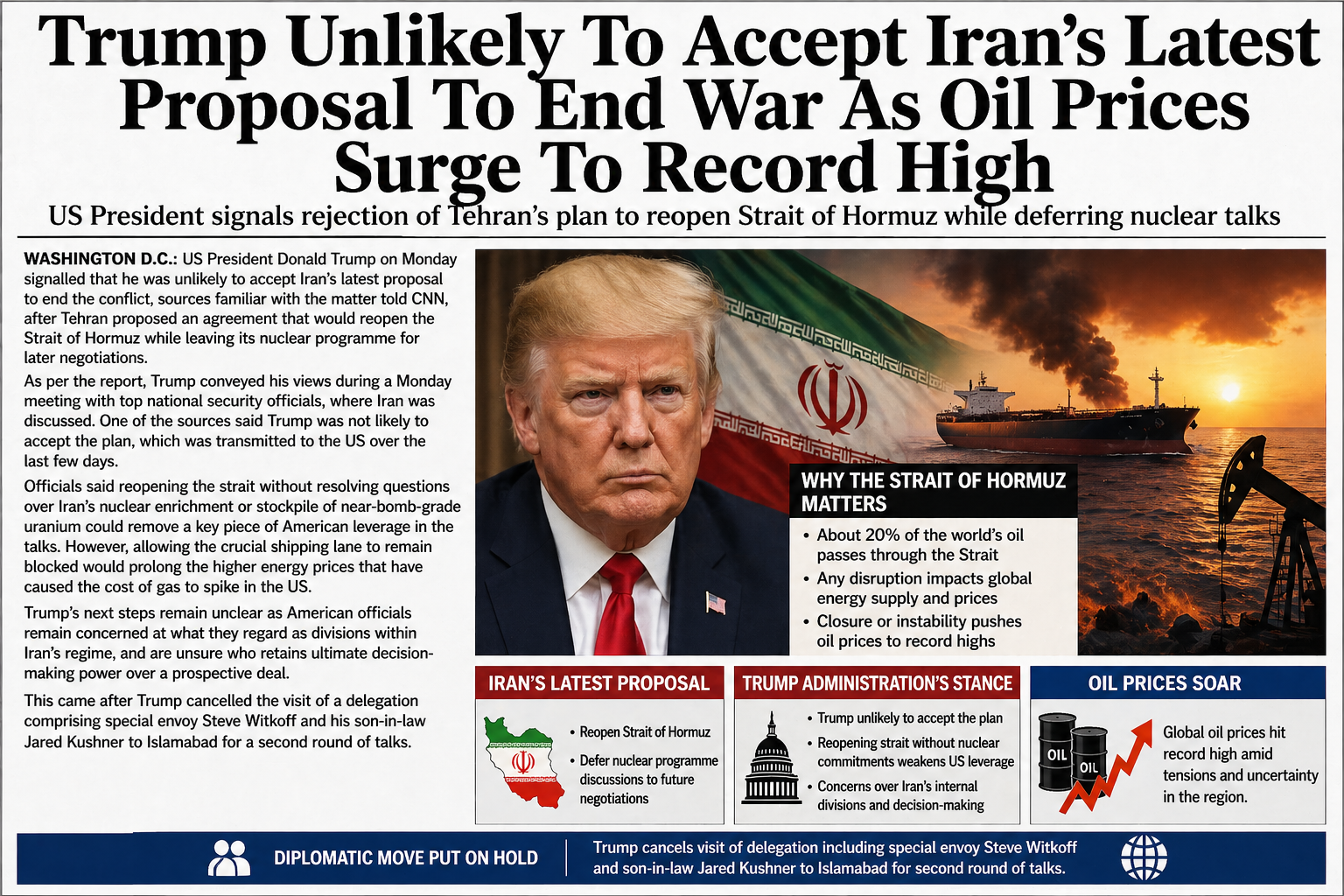
Global tensions surrounding the ongoing conflict involving Iran and the United States escalated further on Monday, as Donald Trump indicated he is unlikely to accept Tehran’s latest proposal aimed at ending hostilities.

According to sources cited by CNN, Iran recently floated a plan that would reopen the strategically vital Strait of Hormuz—a chokepoint for global oil shipments—while deferring contentious issues surrounding its nuclear programme to future negotiations.

The proposal was reportedly discussed during a high-level meeting between Trump and senior national security officials. However, sources suggested that the former US President views the plan as inadequate, primarily because it sidesteps immediate resolution of Iran’s nuclear enrichment activities and stockpile concerns.

US officials believe that agreeing to reopen the Strait without securing commitments on nuclear issues could weaken Washington’s bargaining position in ongoing and future negotiations.

The continued closure or instability around the Strait of Hormuz has had far-reaching economic consequences. As one of the world’s most critical energy corridors, any disruption has triggered a sharp surge in global oil prices, pushing fuel costs to record highs and impacting economies worldwide, including the United States.

While reopening the route could stabilise energy markets, policymakers remain cautious about conceding leverage in exchange for short-term relief.

Adding to the uncertainty are concerns within US intelligence circles about internal divisions in Iran’s leadership. Officials reportedly remain unclear about who holds the ultimate authority to finalise any agreement, complicating diplomatic efforts.

In a related development, Trump cancelled a planned visit to Islamabad by a US delegation that included special envoy Steve Witkoff and his son-in-law Jared Kushner. The visit was intended to facilitate a second round of talks, but its cancellation signals growing uncertainty over the direction of negotiations.

With tensions still high and no immediate resolution in sight, global markets remain on edge. The next steps from Washington and Tehran will be crucial in determining whether the situation moves toward de-escalation or further instability.

As diplomatic channels remain strained, the stakes continue to rise—not just for the countries directly involved, but for the global economy at large.

Related News