Business | Jan 08, 2026
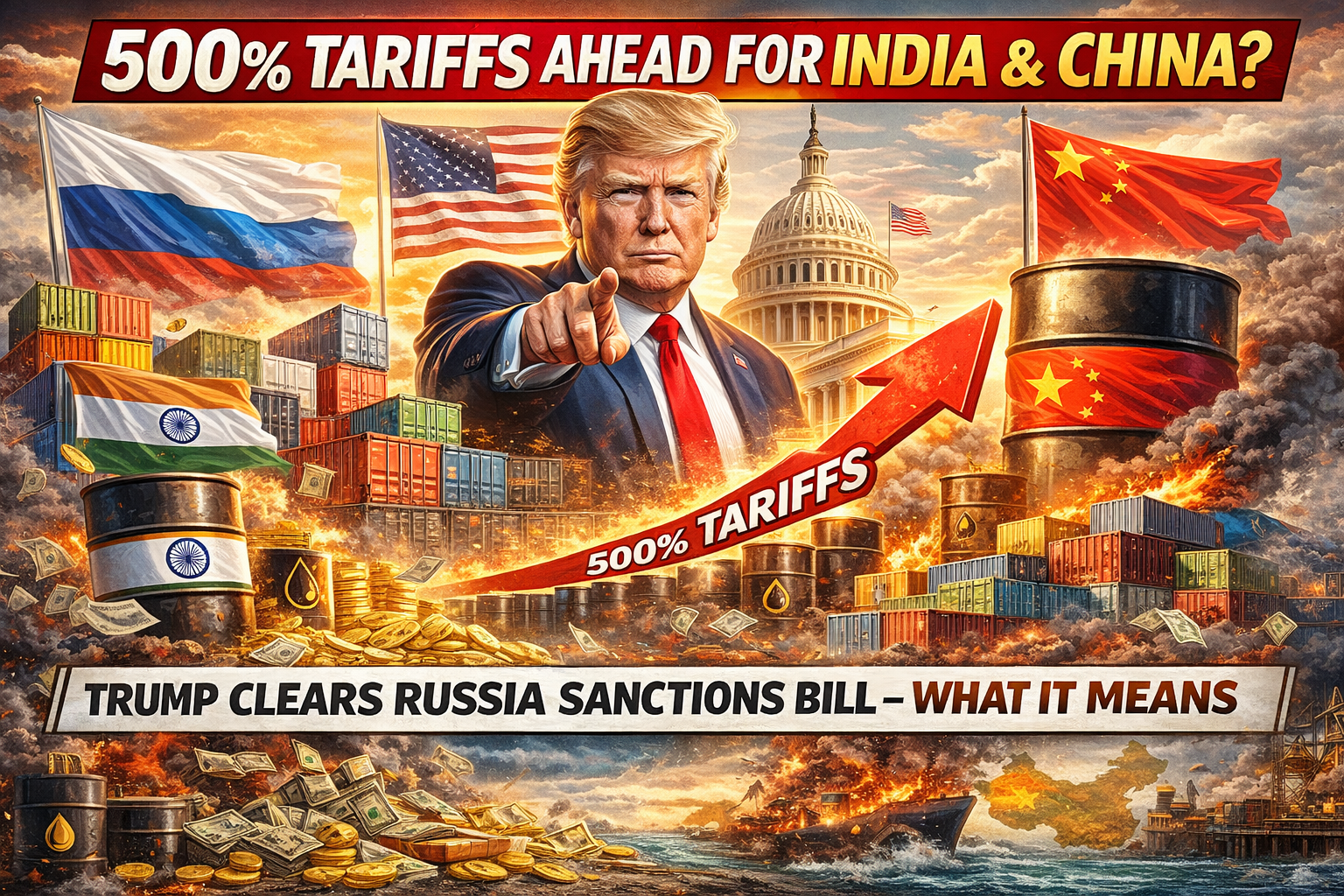
In a move that could dramatically reshape global trade and energy markets, US President Donald Trump has approved a sweeping new legislation aimed at tightening economic pressure on Russia and its trading partners. The proposed law, titled the “Sanctioning Russia Act of 2025,” empowers the United States to impose punitive tariffs of up to 500% on countries that continue to import Russian petroleum and energy-related products.
The bill marks one of the most aggressive economic tools ever proposed by Washington and signals a hardline stance against nations accused of indirectly financing Moscow through oil and gas purchases.
WHAT THE BILL SAYS
According to the provisions of the Act, any country that “knowingly engages in trade, exchange, or import of Russian petroleum, gas, or refined energy products” could face extreme trade penalties. The legislation authorises the US administration to levy tariffs as high as 500% on select imports, effectively making trade with the US economically unviable for targeted sectors.
The measure is intended to cut off Russia’s primary revenue stream, which continues to flow despite existing sanctions due to energy exports to large economies.
WHY INDIA AND CHINA ARE IN FOCUS
India and China have emerged as major buyers of discounted Russian crude since Western sanctions were imposed following the Ukraine conflict. By increasing imports, both countries have helped Russia stabilise its oil revenues even as European demand collapsed.
While the bill does not explicitly name any country, trade analysts say India and China are likely to be among the primary targets if the law is enforced in its strictest form.
The proposed 500% tariffs represent a sharp escalation in US sanctions policy, with far-reaching consequences for India, China, and the global economy. Whether the threat becomes reality will depend on diplomacy, enforcement, and the evolving geopolitics of energy and trade.